The 1937-D 3-Legged Buffalo Nickel: America's Most Iconic Minting Error
When it comes to rare and valuable coins, few capture the imagination of collectors quite like the 1937-D 3-Legged Buffalo nickel. This remarkable error coin has become a cornerstone of American numismatic history, commanding astronomical prices at auction and inspiring passionate collecting stories for nearly a century. Whether you’re a seasoned numismatist or a curious beginner, understanding the history and significance of this coin offers a fascinating glimpse into both U.S. coinage and the unpredictable nature of minting errors.
The Buffalo Nickel: An American Masterpiece
Before we explore the legendary error, it’s important to understand the coin itself. The Buffalo nickel, officially known as the Indian Head nickel, was minted from 1913 to 1938 and represents one of the most distinctive and beloved U.S. coins ever produced. Designed by the renowned sculptor James Earle Fraser, the coin was created to honor American frontier heritage and Native American culture at a time when such recognition was rare in official government coinage.
The obverse features a powerful portrait of a Native American chief, believed to be a composite of three different tribal leaders, while the reverse showcases a majestic American bison. Interestingly, the buffalo was modeled after a specific animal named Black Diamond, a well-known resident of the Central Park Zoo in New York during the early 20th century. This attention to detail and artistic integrity made the Buffalo nickel an instant classic, though its bold relief and intricate design would later prove to be a source of minting challenges.
How the 1937-D Error Occurred
The story of the 1937-D 3-Legged Buffalo nickel is one of human error, overlooked protocols, and an accident that would become one of the most celebrated mistakes in numismatic history. In 1937, at the Denver Mint, an inexperienced mint worker named Mr. Young was operating the coining press when a mechanical failure occurred. The feeder mechanism suddenly stopped, leaving no planchets (blank coins) to strike. Without coins to produce, the dies clashed against each other, and each die was left bearing an impression of its counterpart—a situation that required immediate correction according to proper mint protocol.
Rather than replacing the damaged dies as standard procedure dictated, the rookie employee made a fateful decision: he would simply grind away the impressions from the die faces and return them to service. While polishing the imperfections off the dies, however, he applied excessive force in one critical area. The over-polishing inadvertently ground away the front leg of the buffalo design, and in the process, also damaged part of the back leg. The error went unnoticed, and these altered dies continued to strike coins.
Estimates suggest that approximately 10,000 of these error coins made it into circulation before the mistake was discovered. However, because the error was subtle and because few people in the 1930s thought to preserve Buffalo nickels as collectibles, many of these coins circulated freely through the American economy, enduring the wear and tear of vending machines, cash registers, and countless transactions. As time passed and these nickels aged, the slight error became increasingly difficult to detect with the untrained eye.
The Rarity Factor: Why So Few Survive in High Grade
One of the most compelling aspects of the 1937-D 3-Legged Buffalo nickel is its extreme scarcity in high-grade condition. While an estimated 10,000 coins were produced, the vast majority saw heavy circulation and accumulated significant wear over the decades. During the 1930s and 1940s, few collectors recognized the error’s significance, so there was little incentive to preserve these coins in pristine condition.
As awareness of the error gradually spread within the numismatic community, collectors began actively searching for and saving these nickels. However, by that time, most surviving examples had already been damaged by circulation. Finding a specimen in uncirculated or near-mint condition is exceptionally rare, which explains why high-grade examples command such extraordinary prices at auction. The combination of limited original production, heavy circulation losses, and the relatively recent recognition of the error’s significance has created a perfect storm of scarcity that continues to drive collector demand.
Authentication: Separating Genuine Coins from Counterfeits
Given the significant value of authentic 1937-D 3-Legged Buffalo nickels, it should come as no surprise that numerous counterfeits have been produced over the years. Some fakes are the result of deliberate alteration—unscrupulous individuals have attempted to remove the front leg from regular 1937-D nickels to create fraudulent error coins. Others are entirely fabricated counterfeits. For this reason, authentication is critically important when considering a purchase.
Fortunately, genuine 1937-D 3-Legged Buffalo nickels exhibit several distinctive characteristics that can help distinguish them from counterfeits:
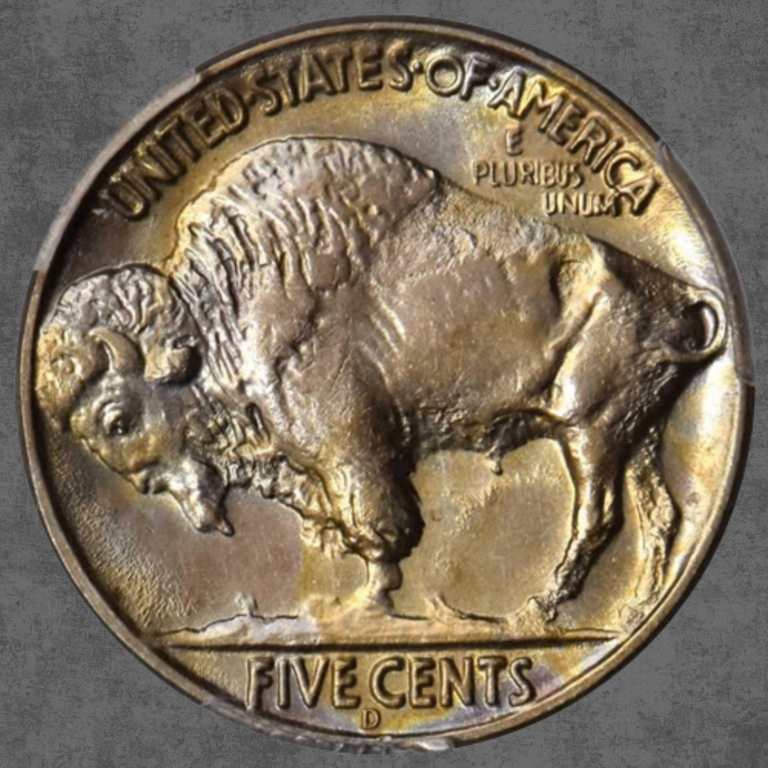
The Missing Leg: On a genuine coin, the front leg should be completely absent, leaving only a faint trace of where it once existed. The rear leg should remain intact and clearly visible, with the hooves distinctly defined.
The Raised Ridge: One of the most telling signs of authenticity is the presence of a raised ridge running under the buffalo’s belly. Collectors often describe this feature with a touch of humor, noting that it appears the buffalo is “relieving itself.” This ridge is a direct result of the die over-polishing process and is nearly impossible to replicate on a counterfeit.
Letter Positioning: On a genuine 3-Legged nickel, the letters P and U in the motto “E Pluribus Unum” should not touch the buffalo’s back. This positioning is a direct result of the die damage and serves as another authentication marker.
The Back Leg Distress: The left back leg should show visible signs of distress and wear from the over-polishing process that caused the front leg to disappear. This subtle detail is often overlooked by counterfeiters.
Mint Mark Quality: The “D” mintmark, located below “FIVE CENTS,” should be sharp and well-defined on a genuine coin.
Professional Certification: The most reliable way to confirm authenticity is to have the coin professionally graded and certified by a reputable third-party service such as PCGS (Professional Coin Grading Service) or NGC (Numismatic Guaranty Company). A certified coin comes with documented authenticity and a numerical grade that reflects its condition, providing peace of mind for both buyers and sellers.
Market Value and Auction History
The 1937-D 3-Legged Buffalo nickel has demonstrated remarkable appreciation over the decades, with prices reflecting both its rarity and its status as one of the most famous error coins in American numismatic history. The following table illustrates recent auction results and estimated values by condition:
Condition | Estimated Value | Notes |
Circulated (VF-XF) | $350–$1,950 | Based on NGC Price Guide (Feb 2026) |
AU (About Uncirculated) | $10,000+ | Mid-range examples |
MS65+ (PCGS) | $60,000 | Strong collector demand |
MS66+ (PCGS) | ~$99,875 | Near-finest known specimens |
MS67 (PCGS) | ~$85,000 | Only 4 sales in past 20+ years |
Some of the most notable auction results include a PCGS MS66+ example that sold for nearly $100,000 in 2021, representing one of the finest known specimens. These extraordinary prices reflect not only the coin’s rarity but also the passionate dedication of collectors who view the 1937-D 3-Legged Buffalo nickel as a must-have piece for any serious numismatic collection.
The Broader Context: Other Rare Buffalo Nickels
While the 1937-D 3-Legged nickel is undoubtedly the most famous Buffalo nickel error, it is far from the only rare and valuable variety in the series. The Buffalo nickel series produced several other key dates and varieties that command significant premiums:
The 1918/7-D Buffalo nickel, featuring an overdate error where a 1917 die was repunched with the 1918 date, is actually rarer and more valuable than the 3-Legged variety, with examples commanding up to $400,000 at auction. The 1926-S, the lowest-mintage regular issue Buffalo nickel with only 970,000 coins struck, regularly sells for $100,000 or more. The 1913-S Type 2 from the San Francisco Mint, representing an early key date in the series, typically brings $40,000 or higher.
These other rare Buffalo nickels remind us that the entire series, not just the 3-Legged variety, holds significant historical and collectible value. Each represents a unique piece of American numismatic history, and together they form a fascinating study in mint practices, error production, and collector demand.
Why Collectors Love the 1937-D 3-Legged Buffalo Nickel
The enduring appeal of the 1937-D 3-Legged Buffalo nickel extends far beyond its monetary value. For many collectors, this coin represents the perfect intersection of history, artistry, and serendipity. The story of how an inexperienced mint worker’s decision to bypass proper protocol resulted in one of the most famous error coins ever produced captures the imagination. It’s a reminder that even in highly regulated government mints, human judgment and occasional lapses in procedure can create lasting legacies.
The coin also serves as a gateway into the broader world of numismatics and error coin collecting. Many collectors who begin their journey with a 3-Legged Buffalo nickel go on to explore other error coins, rare dates, and varieties, building collections that span decades and encompassing thousands of coins. The 1937-D 3-Legged nickel’s fame and accessibility (relative to even rarer coins) make it an ideal starting point for those curious about the hobby.
Furthermore, the coin represents a tangible connection to American history. Minted during the Great Depression, when the nation was struggling economically, the Buffalo nickel symbolized American resilience and pride. The 3-Legged variety, born from a simple human error, adds a layer of authenticity and imperfection that many collectors find more compelling than perfect, intentional designs.
Conclusion: A Timeless Treasure
The 1937-D 3-Legged Buffalo nickel stands as a testament to the enduring fascination that error coins hold for collectors and the broader public alike. Born from a momentary lapse in protocol at the Denver Mint nearly 90 years ago, this humble nickel has become one of the most valuable and sought-after coins in American numismatic history. Whether you’re drawn to it for its historical significance, its artistic merit, or its investment potential, the 1937-D 3-Legged Buffalo nickel remains a must-have piece for serious collectors.
If you believe you own a 1937-D 3-Legged Buffalo nickel—whether discovered in an old collection, inherited from a family member, or acquired at auction—take the time to examine it carefully against the authentication criteria outlined above. And if you’re considering adding one to your collection, remember that professional certification is essential for both authenticity confirmation and maximum market value. This remarkable coin, born from an accident, has transcended its humble origins to become an icon of American numismatic excellence.